Tuesday, 9 September 2014

Information About The Dark Room

1. The next part I had to learn was about the shutter speed dial set. The shutter speed means the time of which the film is exposed to the light, more modern day cameras from the 1960s and forwards cameras show this regular increments like 1/500 and 1/250.


2. Another part I had to learn about the camera was the aperture ring, which is a small opening near the front of the camera lens. These are normally marked in the standard increments and nearly any lens will have settings of f/8 and or f/11. Aperture size is usually calibrated in f-numbers or f-stops i.e. those little numbers engraved on the lens barrel like f22 (f/22), 16 (f/16), f/11, f/8.0, f/5.6, f/4.0, f/2.8, f/2.0, f/1.8 etc. This means, f/16 will let in 1X the amount of light than a diaphragm opening of f/22 and so forth. The Smaller number, as the size of the aperture is expressed as a ratio against the focal length. A smaller aperture will let less light onto the film, and give more depth of field. For example, with a 50mm focused to 8 feet (2.4 m), at an aperture of f/5.6, the portion of your scene from about 6.5 to 11 feet (2.0 to 3.4 m) would be in focus for this camera.


3. The IOS dial is another major part when learning the camera. The IOS dial which is always marked as ASA, this tells the camera the speed of your film. This is essential for cameras that have automatic exposure. ISO 50 film will require an exposure twice as long as an ISO 100 film, for example   


 4. The rewind release allows you to rewind the film. This is normally while shooting the film is locked so that it can only move forwards and not backwards, this is for obvious reasons. This is usually found on the base of the camera, slightly into the body but some cameras are different and have it somewhere else.


5. The manual focus single lens reflex cameras are more tricky that others. Turn the focusing ring until the image in the viewfinder is sharp. The manual focus has two focusing aids to make it easier to tell when you’re in perfect focus. On the screen on the camera you will see in the right in the centre lines that splits the images into two pieces. Which are aligned when the image is in focus


What You Will Need?

  1. 1-2 rolls of exposed T-MAX film
  2. Scissors
  3. Developing tank
  4. Beaker or measuring cup
  5. Thermometer
  6. Timer
  7. Containers (for mixed chemicals)
  8. Negative carrier
  9. 3 Containers for mixing chemicals
  10. Tongs 
  11. Negative carrier
  12. 4 trays for chemicals
  13. Running water
Chemicals:
  1. Kodak T-MAX Developer
  2. Photo Flo
  3. Rapid fixer with hardening agent
  4. Stop Bath
  5. Hypo Clearing Agent (HCA)

Developer
Developer activates the light sensitive crystals that make up the emulsion on your paper. When the crystals come into contact with developer, any parts of the paper exposed to light will become some shade of black.

Hypo Clear
Hypo is not always used, but it helps insure uniform drying, so that you won't have any drying marks later on.
I used the tongs when placing my image in the chemicals.


The Timer
Timers can be different, but their purpose is always the same: to accurately control the exposure time of an enlarger. 

Fixer
Fixer removes the unexposed crystals on the emulsion, making the paper light safe. Paper that has been through fixer can then be taken into open light without worries of turning black. Insufficient fixing will turn a picture yellow over time.

Stop Bath
The Stop Bath is an acid that deactivates the developer. As you put a print into the stop bath, it stops turning black.


A is where the film is placed on the hanger. The film is placed in a series of tanks

B is the containing developer, rinse, and fixer and wash station. Note the separation of drying and wet portions of the darkroom. Safelights are mounted on the wall

C is the view box

D is the drip sink is available for wet film viewing 


Monday, 8 September 2014

Creating Mood With Light

The photograph below I have taken to show how I have chosen to create mood with lighting. The equipment I needed was the green screen, a black back drop (cloth), the lighting equipment with umbrellas and a dark empty room also an object to photograph.


Here are some of the examples of me creating mood with lighting, I used the lighting equipment on the left hand side of the object so this will cast a shadow on the other side of the object. Firstly I chose to take photos of the globe, however this didn't create as much mystery and mood as I would have wanted. I then moved on to a dark grey bowl because this is dark and the back drop is dark this created much more mood and shadow than with the globe.


Thursday, 4 September 2014

What are Storage devices?

A storage device is a way of storing more data that are used in computers. A computer has many types of data storage devices. Some of them can be categorized as the removable data storage devices and the others the non-removable data storage devices.
The “memory” is of two types; one is the primary memory and the other is the secondary memory.
A primary memory is the volatile memory and the secondary non-volatile memory. The volatile memory is the kind of memory that is erasable and the non-volatile memory is the one where in the contents cannot be erased.
The secondary storage devices are usually known as hard disk drives – this is the most common type of storage device that is used in almost all the computer systems. The other ones include the floppy disk drives, the CD ROM, and the DVD ROM. The flash memory, the USB data card etc.

Floppy Disk
A floppy disk is a data storage medium that is composed of a disk thin and flexible (floppy) magnetic that stores medium encased in a rectangular plastic shell. Floppy disks are read and written by a floppy disk drive.  Floppy disks are used to move small spreadsheets and databases to one computer to another. Floppy disks are useful to back up small data files.


Fixed hard discs
A hard disk drive is the device used to store large amounts of digital information in computers and related equipment like iPods and games consoles such as the Xbox 360 and PS3. Hard disk drives are used to store operating systems, software and working data. These are appropriate for any application which needs very fast access to data for both reading and writing to.

Memory Sticks / Pen Drives

Memory sticks have a more compact shape, operate faster, hold much more data, have a more durable design, and operate more reliably to their lack of moving parts. USB flash drives are typically removable and rewritable, much smaller than the floppy disk. Storage capacities typically range from 64 MB to 64 GB

Storage Device - Memory Card

Storage device for a camera is used for flash memory for soiled-state electronic flash memory data storage device used with digital cameras as well as, handheld and mobile computers, telephones, music players, video games, consoles and many more other electric devices. Now there are most new PCs have built-in slots for variety of memory cards; memory sticks, CompactFlash, SD, etc. some digital gadgets support more than one memory card to ensure compatibility, there are many types of storage memory cards secure digital (SD), mini secure digital (MiniSD), compact Flash (CF) type 1, Compact Flash (CF) type 2 of several other more. 

Wednesday, 3 September 2014

Long Lens

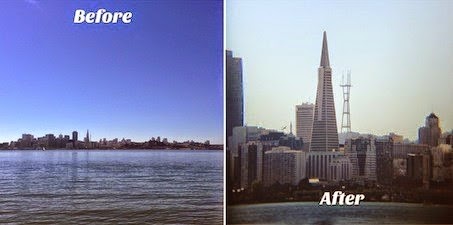
 In photography another lens which is used is called a long-focus lens, this lens has a focal length that is longer than the diagonal measure of the film or sensor that receives its image. This lens is used to make a distant object appear magnified with magnification increasing as longer focal length lenses are used. This effect is similar to moving closer to the object, however is not the same. Two images taken from the same location, one with a wide angle lens and the other with a long-focus lens, will show identical perspective, in that near and far objects appear the same relative size to each other. This lens is one of the three most basic photographic lens types. The most common type of long focus lens which is the telephoto lens. The long lens also makes it easier to blue the background more, even when the depth of field is the same. Photographers will sometimes use this effect to defocus the background on an image to “spate” it form the subject. Having the background blurred is often referred to as a” brokeh” by photographers.


here are some example of the long lens in action and what the lens looks like in comparison to other lens" 


a wide-angle lens

In photography a wide-angle lens is a lens whose focal length is dramatically smaller than the focal length of a normal lens for a given film plane. A normal lens will have an angle view between 40° and 50° while a wide-angle lenses have an angle view that is much bigger.
The wide-angle lens allows more of the scene to be included in the photo, which means this type of lens is very useful for architectural, interior and landscape photography where the photographer may not be able to move backwards from the scene to photograph it all. Another may use for a photographer for this type of lens is if the photographer wishes to emphasis the different in size/distance between objects in the foreground and background; nearby objects appear very large and objects at a reasonable distance  appear small and far away. This exaggeration of relative size can be used to make the foreground objects more prominent and stand out, while catching the expansive background. 

here are some examples of professional work using a wide-angle lens and what a wide-angle lens looks like;   


telephoto lens

Telephoto lenses are now and then taken into the further sub-types of medium telephoto: lenses covering between a 30° and 10° field of view, and super telephoto: lenses covering between 8° through less than 1° field of view. In photography and cinematography, a telephoto lens is a specific type of a long-focus lens in which the physical length of the lens is shorter than the focal length.This is done by incorporating a special lens group known as a telephoto group that extends the light path to create a long-focus lens in a much shorter overall design. The angle of view and other effects of long-focus lenses are the same for telephoto lenses of the same specified focal length. 


Telephoto lenses compress the sense of depth, whereas wide angle lenses exaggerate the sense of depth. Since spaciousness is an important quality in many landscapes, the rationale is that wide angle lenses are therefore better suited.


Macro Lens

A Macro-Lense is used for extreme close-up photography, usually of very small objects, the size of the object in the photograph is greater than life size by some meanings. The relation of the subject size on the film plane to the actual subject size is known as the “reproduction ratio”. A true macro lenses offer a magnification factor of 1.0x or 1:1 at its closest focus setting. Fit one of these lenses to a DSLR like the Canon EOS 60D, and a standard UK postage stamp will fill the whole frame. Macro lens varies between the price rage of £649.99 for a sigma 05mm f/2.8 EX DG HSM and for a Samsung silent focusing available for around £530 but they are normally optimized to operate at closer than normal distance.
Here are some examples of what the Macro Lens can do;